| ||||||||||||||||||||||||||
| 归 |
|
 Hanzi-Trainer |
||||||||||||||||||||||||
| ||||||||||||||||||||||||||
Meaning

| ||||||||||||||||||||||||||
Pronunciation
|
guī | |||||||||||||||||||||||||
Explanation |
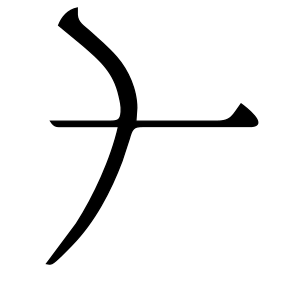
Left: knife刂, right: hand  /彐; simplified from 帰. Originally showed a man with a knife returning home (where the broom 帚 is) /彐; simplified from 帰. Originally showed a man with a knife returning home (where the broom 帚 is) | |||||||||||||||||||||||||
|
When the man with the knife is at his wife 妇 (today: hand without broom) he has returned. | |||||||||||||||||||||||||
Radicals
| ||||||||||||||||||||||||||
Vocabulary
| ||||||||||||||||||||||||||




| guī nà | to sum up; to summarize; to conclude from facts; induction (method of deduction in logic) | |
| guī huán | to return sth; to revert | |
| guī jié | to sum up; to conclude; in a nutshell; the end (of a story) | |
| 归根结蒂 | guī gēn jié dì | ultimately; in the final analysis; after all; when all is said and done |
| guī jiù | blame; declare to be at fault | |
| 避其锐气击其惰归 | bì qí ruì qì jī qí duò guī | avoid the enemy when he is fresh and strike him when he is tired and withdraws |
| 归真返璞 | guī zhēn fǎn pú | to return to one's true self; to regain the natural state |
| 归真返璞 | guī zhēn fǎn pú |
List of the characters | List of the radicals
| ||||||||